
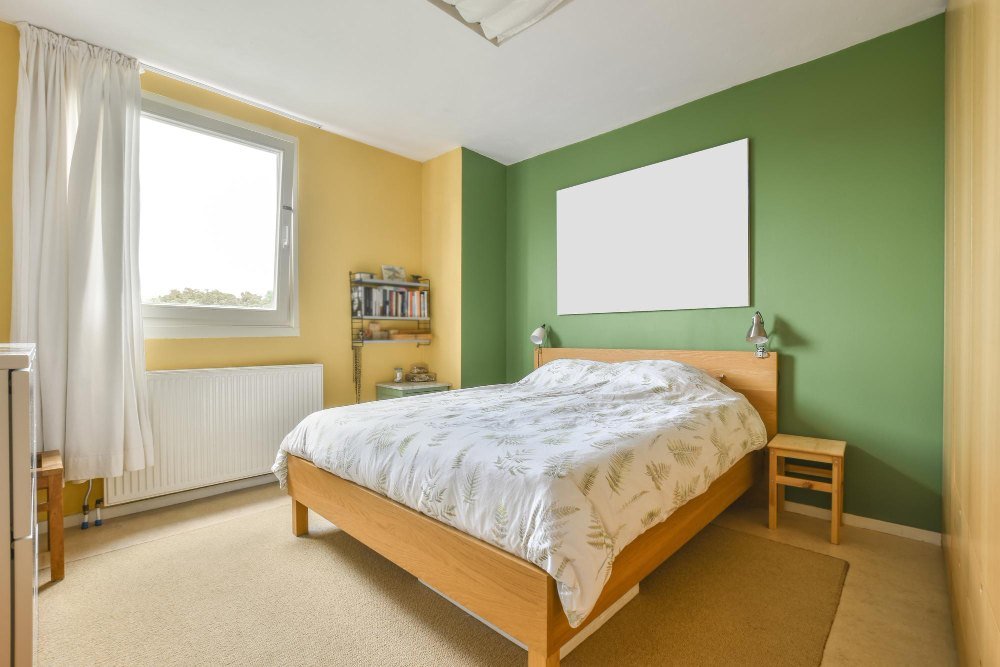
Small bedrooms ask more of their windows than larger ones. They need darkness without heaviness, privacy without enclosure, and softness without visual clutter. The wrong window treatment can make a compact room feel boxed in or overly busy, while the right one quietly expands the space — visually and emotionally.
Designing window treatments for small bedrooms is less about decoration and more about precision. Scale, fabric, and placement all matter, and even minor adjustments can have a surprisingly large impact on how the room feels day and night.
Prioritise Light Control Without Bulk
In a small bedroom, controlling light is non-negotiable, but bulky solutions can quickly overwhelm the space. This is where streamlined treatments shine. Roman shades with blackout lining, roller shades with a neat cassette, or cellular shades fitted inside the window frame offer excellent light control without adding visual weight.
Keeping the treatment close to the window helps preserve wall space and prevents the room from feeling crowded. When darkness is essential for sleep, a properly lined shade does the heavy lifting — without the need for excessive layers.
Use Curtains Strategically, Not Excessively
Curtains can work beautifully in small bedrooms, but only when used with intention. Floor-length custom curtains create a sense of height and softness, yet they should be tailored and well-fitted rather than voluminous. Mounting the rod higher than the window frame draws the eye upward, subtly elongating the room.
Light to medium-weight fabrics are ideal here. They add movement without swallowing precious square footage. When paired with an inner shade, curtains can remain open most of the day, acting as a visual frame rather than a physical barrier.
Stick to a Calm, Cohesive Colour Palette
Colour plays an outsized role in small spaces. Window treatments that closely match the wall colour help maintain visual continuity, making the room feel larger and less interrupted. Soft neutrals, muted tones, and gentle textures work especially well in compact bedrooms.
Pattern isn’t off-limits, but it should be understated. Fine stripes, subtle weaves, or tone-on-tone designs add interest without introducing visual noise. The aim is to support rest, not compete for attention.
Choose Fabrics That Add Softness Without Weight
Heavy fabrics can make a small bedroom feel enclosed, particularly when used in dark colours or thick weaves. Instead, opt for fabrics that drape softly and hold their shape without looking dense. Linen blends, cotton weaves, and lightly textured fabrics strike this balance well.
If insulation or blackout performance is needed, rely on lining rather than fabric bulk. This keeps the outward appearance light while ensuring the room remains comfortable and sleep-friendly.
Mount High and Keep Lines Clean
One of the simplest ways to make a small bedroom feel larger is to adjust how window treatments are mounted. Hanging curtains closer to the ceiling, even when the window itself is lower, extends the vertical line of the room and reduces the sense of compression.
Clean lines are just as important. Simple pleats, minimal hardware, and uncluttered finishes prevent the window from becoming a focal point for the wrong reasons. In small bedrooms, restraint reads as confidence.
Consider Layering for Flexibility
Layering doesn’t have to mean excess. In fact, a well-considered combination of fitted custom roman shades and lightweight curtains offers flexibility without visual overload. The roman shade manages privacy and light at night, while the curtains soften the room and add a sense of completeness.
This approach is particularly useful in bedrooms that serve multiple purposes — sleeping, reading, or working — where light needs vary throughout the day.
Think About Maintenance and Everyday Use
Small bedrooms are often used intensely, which means window treatments need to be practical. Easy-to-operate shades, fabrics that don’t crease easily, and finishes that resist dust all contribute to a space that feels calm rather than fussy.
Choosing treatments that are simple to maintain ensures the room stays restful over time, rather than becoming another thing that demands attention.
Final Thoughts: Let Simplicity Do the Heavy Lifting
In small bedrooms, the best window treatments don’t shout — they quietly support the space. By focusing on fit, light control, and visual continuity, you can create a room that feels larger, calmer, and more comfortable than its square footage suggests.
Thoughtful window treatments don’t just dress the window; they shape how the entire room is experienced.