
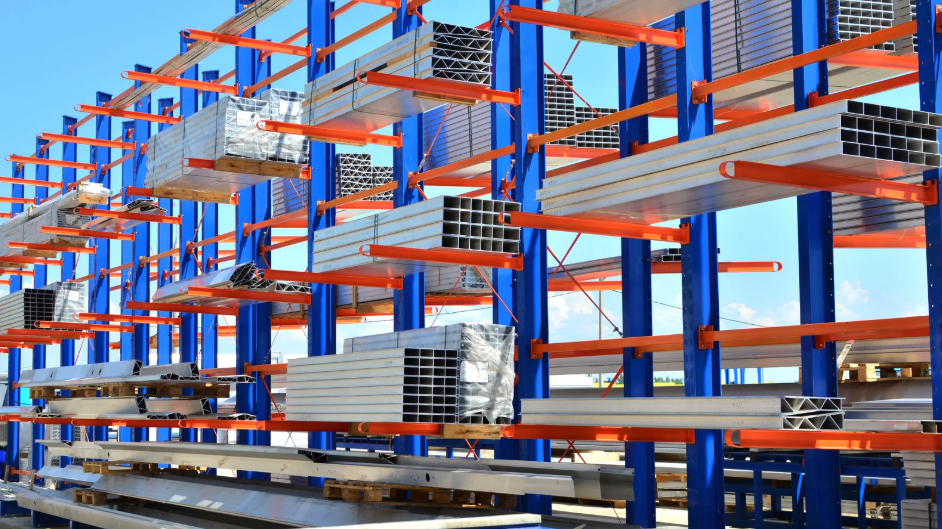
Warehouses that manage massive inventory items often struggle with the limitations of standard shelving systems, which cannot safely support extreme weights. When the storage requirements involve dense materials like structural steel or heavy timber packs, the structural integrity of the racking becomes a critical safety factor. Utilizing a dedicated heavy duty cantilever rack offers a robust solution designed specifically to withstand these intense vertical pressures without bowing or failing. This specialized equipment transforms a cluttered floor into an organized vertical space, allowing for efficient retrieval of bulky items.
Managing Dense and Irregular Loads
Industrial environments often handle materials that are not only long but also incredibly dense, such as bundles of steel pipes or packs of hardwood lumber. A standard pallet rack is obstructed by front columns that make loading these long items difficult and unsafe. Heavy-duty cantilever systems eliminate this barrier by utilizing a central column design with extending arms. This open face structure allows forklifts to deposit long heavy loads without maneuvering around vertical obstacles. For businesses storing items like furniture crates or sheet metal, this accessibility reduces product damage and speeds up handling times significantly. The robust arms are engineered to hold thousands of pounds per level ensuring that even the heaviest stock remains secure off the ground.
Structural Integrity of Components
The defining feature of a heavy-duty system is the material used in its construction. Unlike lighter systems that might use roll-formed steel, high-load racks are typically constructed from structural I beams. This is the same type of steel used in building construction, providing a superior strength-to-weight ratio. These rigid components resist impact damage from forklifts better than their lighter counterparts, which is a common occurrence in busy industrial settings. The solid steel construction ensures that the columns remain upright and stable even when fully loaded to their maximum capacity, preventing catastrophic collapses that could injure workers or destroy valuable inventory.
Customizing the System Configuration
Every warehouse has unique spatial constraints and inventory dimensions that dictate the design of the racking system. The flexibility of cantilever racks allows for the adjustment of arm height and angle to accommodate specific load sizes. Facility managers must carefully calculate the required capacity for each arm and the total load for each column to prevent overloading. Knowing what questions to ask when ordering a cantilever rack helps operators determine the exact arm length and column spacing needed for their specific inventory. This thorough planning phase ensures that the final installation meets the precise needs of the operation while maintaining a high safety margin. Proper spacing prevents load deflection, which occurs when materials sag between arms, causing instability.
Professional Installation Standards
The installation of heavy-duty racking involves complex engineering principles, including seismic calculations and concrete slab analysis. These systems exert tremendous point loads on the warehouse floor, requiring expert assessment to ensure the foundation can support the weight. Professional installers utilize specialized anchors and bracing techniques to secure the columns permanently to the concrete. They also ensure that the racks are perfectly plumb and level, which is essential for maintaining the rated capacity of the system. Relying on qualified experts for assembly guarantees that the racking complies with all local building codes and safety regulations, providing peace of mind for business owners.
Conclusion
Investing in heavy-duty cantilever racking is the most effective way to store high-load materials safely and efficiently. These systems provide the necessary strength to support dense industrial inventory while offering the accessibility required for fast operations. By choosing structural steel components and relying on professional configuration and installation, warehouse managers create a secure environment that protects both their workforce and their products. The result is a streamlined facility capable of handling the most demanding storage challenges with ease.